
7.4 DANGEROUS GOODS REGULATIONS
The training is designed for employees involved in the processes of handling, loading, and unloading shipments and baggage, including dangerous goods. It provides the necessary knowledge and skills for safe handling of cargo and applying the rules of the IATA Dangerous Goods Regulations (DGR).
What will you know and be able to do after the training?
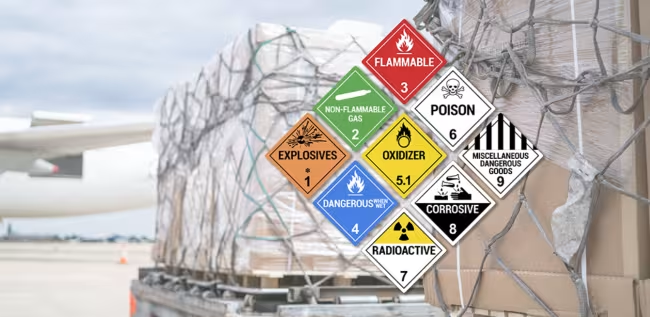
- Recognize classes of dangerous goods and their symbols;
- Identify potentially hidden or undeclared dangerous goods;
- Apply requirements for safe storage, segregation, and securing of cargo;
- Respond correctly to leaks, damages, and incidents;
- Follow guidelines related to loading and unloading aircraft;
- Report accidents, incidents, and discrepancies according to established procedures;
- Understand the responsibilities of various participants in the supply chain.
What will you receive?
Interactive exercises, real case studies, simulations of practical situations, and preparation for the final test.
The final test assesses the understanding of the material and measures your knowledge to identify areas for improvement. To successfully complete it, you need to achieve a minimum of 80% success rate.
⚠️After successfully passing the test, you receive a certificate in Safe Transportation of Dangerous Goods 7.4. The validity is 24 months, and knowledge must be refreshed every 2 years.
Who is this training for?
Individuals with functional duties to safely organize the loading and unloading of dangerous goods from and to baggage halls, and on and off aircraft.
For personnel engaged in:
- Managing cargo in warehouses and baggage halls;
- Loading and unloading ULDs;
- Loading and unloading the cargo compartments of aircraft;
- Transporting cargo and baggage to and from aircraft.
What will you learn?
- Basics of dangerous goods and applicable regulations;
- General restrictions, prohibitions, and identification of hidden dangerous goods;
- Classification, packing groups, and combined hazards;
- Markings, labels, and documentation;
- Inspections for damages and leaks;
- Segregation, orientation, and securing of cargo;
- Preparing cargo and ULDs for loading onto aircraft;
- Handling ULD tags/labels and transporting cargo;
- Checks against NOTOC and directions from controllers/ramp agents;
- Unloading, specific requirements, and safe practices;
- Reporting incidents, accidents, and undeclared dangerous goods;
- Emergency response procedures.
Duration:
- Initial training: 6 training hours
Recurrent training: 4 training hours
Instructors
The training is led by IATA-certified DGR instructors with extensive practical experience in aviation safety, cargo handling, and the application of international IATA and ICAO standards.
They use an interactive approach, combining theory with real case studies, to ensure practical and effective knowledge acquisition.